
Tube Bending Guides
How to Choose a CNC Tube Bending Machine for HVAC Tube Production
A practical guide to choosing a CNC tube bending machine for HVAC tube production: tube size, bending radius, accuracy, and automation.
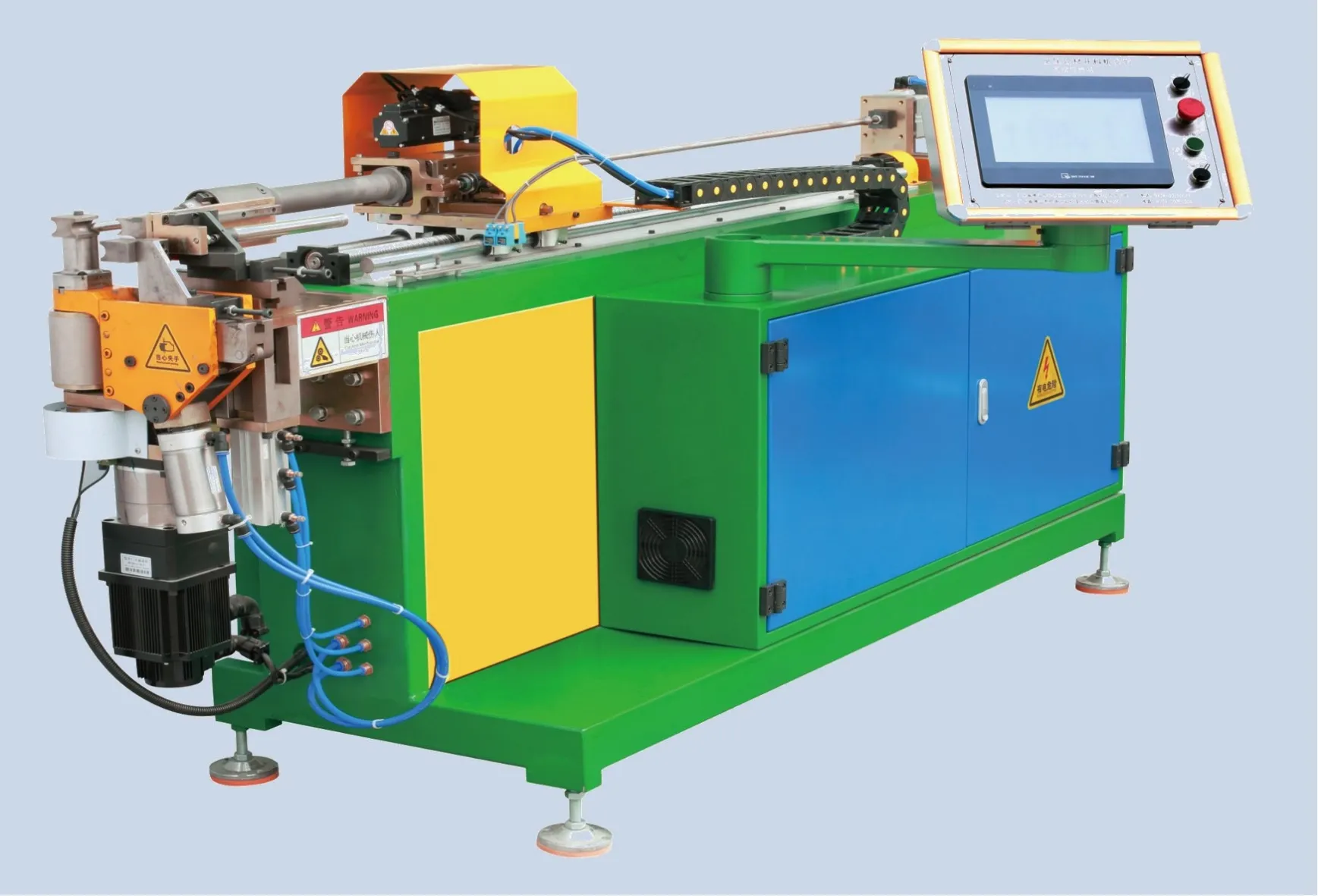
HVAC tube production depends on consistent bending quality. Copper and aluminum tubes for air conditioners, heat pumps, and refrigeration fittings must be bent to tight radii without wrinkling, flattening, or cracking, and every bend in a batch must match the last one. A CNC tube bending machine replaces manual setup and operator judgment with programmed control, so the choice of machine shapes the quality and cost of every tube that follows.
Start with the tube itself. Check the diameter and wall thickness range the machine can handle, the materials it is built for, and the minimum bending radius it can achieve without deforming the tube. For HVAC work, the machine should handle copper and aluminum tubes across the sizes used in condensers, evaporators, and connecting pipework, and it should keep wall thinning and ovality within the limits your fittings require.
Look at how the machine is programmed. A CNC system that stores multiple product parameters lets operators recall a complete bending program by product name instead of re-entering settings for every batch. For three-dimensional bends, the machine should accept X, Y, and Z coordinate input so multi-plane bends are produced from the drawing data, with repeatable accuracy from the first piece to the last.
Finally, match automation to your volume. Fully automatic feeding, bending, and unloading suit high-volume HVAC production, while a semi-automatic setup may suit smaller batches or frequent changeovers. Ask for a bending trial with your own tubes and drawings before deciding, and confirm how the supplier supports installation, training, and spare parts, so the machine keeps running after it is installed.