
Tube End Forming
Tube End Forming for Refrigeration Fittings: Processes and Equipment
Tube end forming shapes refrigeration tube fittings by expanding, reducing, and flaring tube ends. This guide covers the main processes and the equipment used.
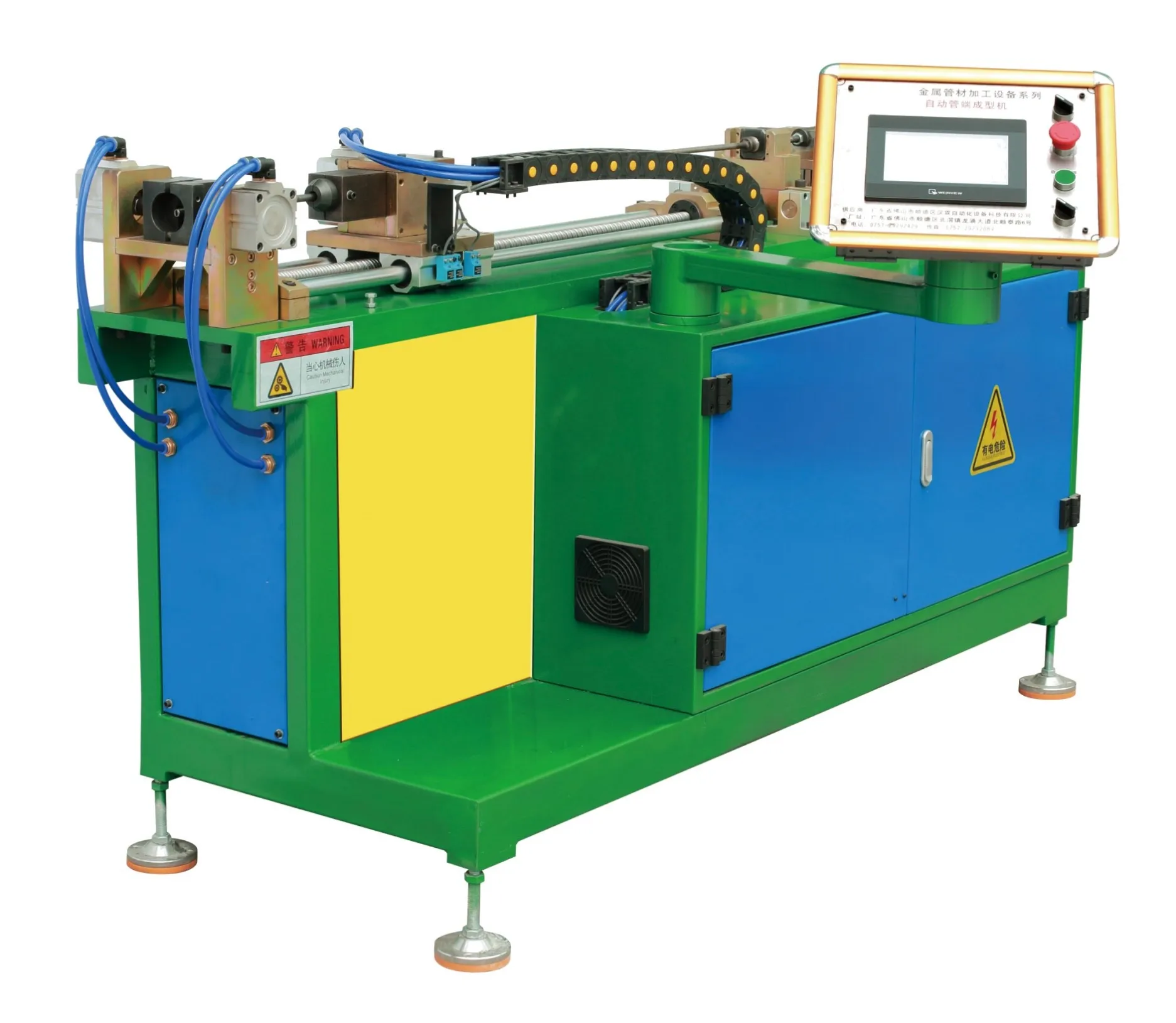
Refrigeration fittings depend on tube ends that fit together exactly. Expanding, reducing, and flaring change the diameter and shape of a tube end so it can join another tube, a valve, or a fitting without leaking. Tube end forming machines perform these operations with controlled force and position, so every end in a batch has the same dimensions.
Expanding enlarges the inside diameter of a tube end so another tube can slide inside it, while reducing narrows the end for a smaller connection. Flaring opens the end into a cone that seals against a mating fitting. Multi-station machines can combine several of these operations, forming one end after another without moving the tube between machines.
The equipment matters as much as the process. A forming machine should hold the tube firmly, control the forming depth and force, and repeat the same stroke for every piece. CNC control lets operators store the forming parameters for each product, so changing from one fitting size to another is a program change rather than a mechanical rebuild.
When planning tube end forming for refrigeration fittings, start from the joint: the fitting type, the tube material and wall thickness, and the sealing requirement. Then check that the machine covers your diameter range, that it can form the ends you need without cracking or thinning the wall, and that it fits the production line before and after forming, from cutting and bending through to assembly.